Storing Physical Gold in Houston: Home Safe, Bank Box or Depository
The best place to store physical gold in Houston is the one that balances three things for your situation: how safe it is from theft and disaster, how quickly you can reach it, and what it costs to insure and maintain. A home safe gives you control and instant access. A bank box or private vault gives you stronger protection and easier insurance, in exchange for a fee and limited hours. Most buyers choose based on how much gold they hold.
Start with the amount and the risk
A few coins in a drawer is a different problem from a stack of bars. Before choosing a storage method, work out the total value you are protecting and what a loss would mean to you. A small holding can reasonably live in a good home safe. As the value grows, the case for professional storage gets stronger, because a single break in or fire could cost far more than years of storage fees.
Also think about who knows. Gold stored at home is only as secure as your silence about it. Tell as few people as possible, avoid posting about purchases, and keep deliveries and packaging out of sight. A quiet owner is a safer owner.
Storing gold at home
Home storage means the gold is within reach, with no fees and no appointments. It also means you carry all the risk. If you store at home, buy a proper safe rather than a lockbox. Look for a safe with a solid steel body, a strong lock and a fire rating that lists a temperature and a time. Houston adds a second consideration, which is water. Flooding and storm damage are real, so a safe that is fire rated may still not be water resistant. Check the specification, and think about where in the house the safe sits. An upper floor is safer in a flood than a ground floor closet.
Anchor the safe. A heavy safe that can be carried off by two people is not a safe. Bolt it to a concrete slab or a structural floor, and place it where it is hard to see and hard to pry open. Do not keep the only copy of the key or combination in an obvious place, and keep a written inventory in a separate location, with weights, serial numbers and photos.
The weak point at home is insurance. Many standard home policies place a low cap on precious metals, and some treat bullion as an investment that is not covered at all. Read the policy, ask the insurer directly, and add a rider or a separate policy if the limit is too low. Do not assume that a general policy will cover a loss that it does not list.
Bank safe deposit boxes
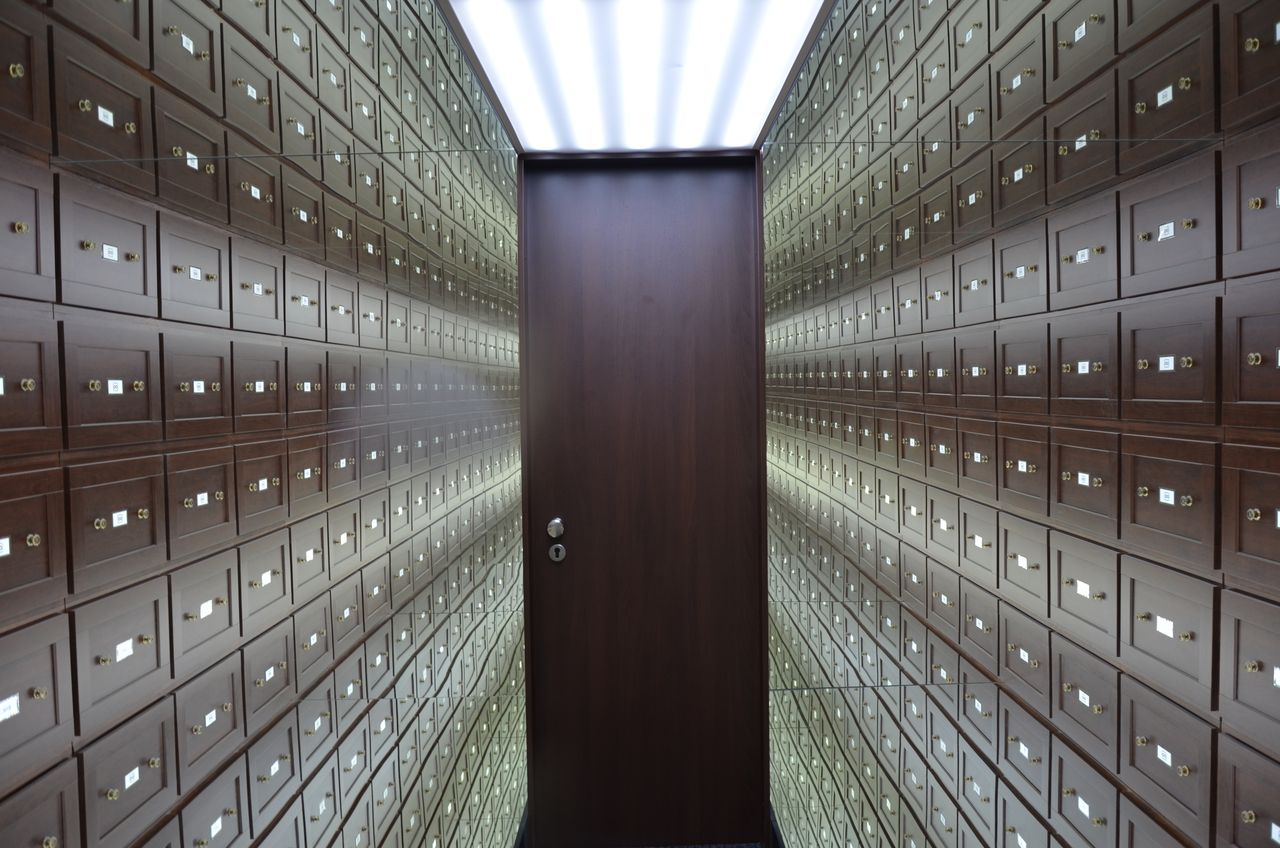
A safe deposit box moves the gold out of the house and into a vault with trained staff, cameras and controlled access. The cost is modest compared with the value it protects, and it removes the worry of a home break in. Boxes come in several sizes, so choose one that fits your bars or coins with room to spare.
Know the limits. The contents of a box are generally not insured by the bank, and the box agreement usually says so. You still need your own coverage, and that coverage may require an inventory and proof of ownership. Access is limited to banking hours, which can be a problem in an emergency, and in some situations a box can be sealed, for example during a legal dispute or after an owner's death until the estate is sorted out. Ask the bank how access works for a co owner or an heir before you rent.
Private vaults and depositories
Private vault companies and depositories exist for people who hold gold in larger amounts. They offer high security, around the clock monitoring and insurance arrangements that are built for bullion. Some offer segregated storage, where your bars are held under your name and kept apart from anyone else's, and others offer pooled storage, where you own a share of a larger stock. Segregated storage gives you a clear claim to specific bars, and it usually costs more.
Do your homework before you hand over metal. Ask who owns the facility, how long it has operated, what insurance it carries and who the insurer is, and whether it is audited and by whom. Ask how you withdraw, how much notice is needed and what the fees are for each action. Read the contract in full. Be wary of any arrangement where the paperwork says you own gold but the company can lend it out or use it, because that turns a claim on metal into a promise from a company.
Comparing the options
- Home safe: lowest cost and fastest access, highest personal risk, and insurance needs attention.
- Bank box: low cost and good physical security, limited hours, and the contents are usually not insured by the bank.
- Private vault: strongest security and insurance, higher fees, and trust in the operator matters.
- A mix: many owners keep a small amount at home for quick needs and the rest in a box or vault.
Records matter as much as the lock
Whatever you choose, keep records. Save every receipt, with the date, product, weight and price. Photograph each coin and bar and note any serial numbers. Store a copy of this inventory away from the gold, in a place you can reach if the house floods or burns. Good records help with insurance claims, with proving ownership and with working out any gain when you eventually sell.
Plan for the people who will inherit. Make sure a trusted person knows where the gold is, how to reach it and who to call. A holding that nobody can find is as good as lost, and a clear plan saves your family stress at a hard time.
A practical checklist
- Decide how much you hold and what loss you could tolerate.
- Choose a storage method that matches the amount and your need for access.
- Confirm in writing what your insurance covers and what it excludes.
- Bolt down any home safe and check its fire and water ratings.
- Keep an inventory with photos and receipts in a separate place.
- Tell as few people as possible, and make sure a trusted person knows the plan.
Storage is not the exciting part of owning gold, but it is where holdings are protected or lost. Spend as much care on where the metal sits as on where you buy it, and you will keep what you have worked to build.